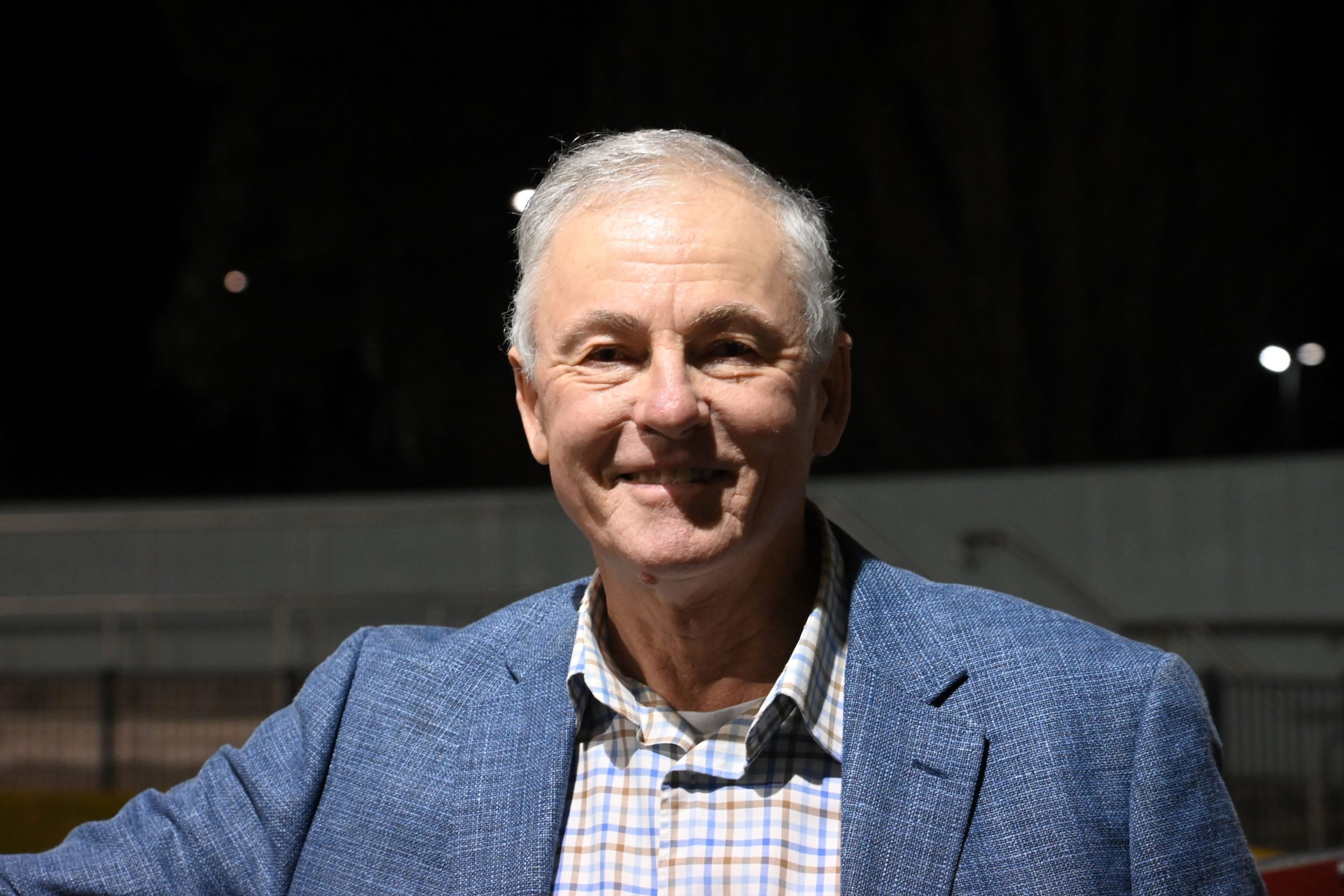
Vale - Colin Watts (OAM) - one of our legends
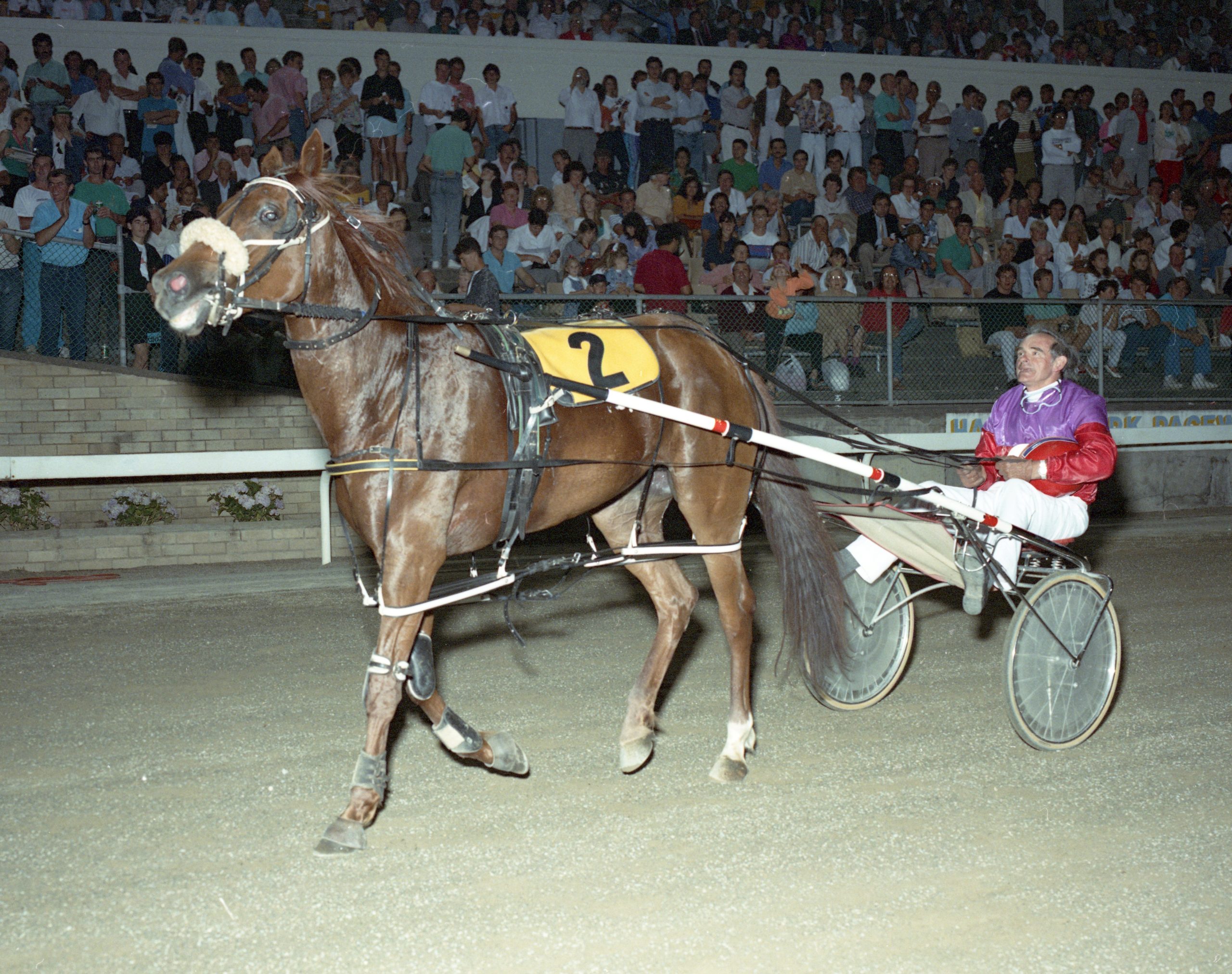
NSW has lost one of its most treasured horsemen this week with the passing of Colin Watts at the age of 97.
Colin passed away on Tuesday (December 3) from health-related issues following an operation on a fractured hip four months earlier.
Despite his longevity, his death comes as a blow to his family and vast number of friends.
Many people are dedicated to their own particular calling, but none more passionately than Colin Watts.
He was highly respected, not only for his ability as a horseman, but also for his administrative skills in the harness racing industry.
Which is why, like his legendary father, J. D. (Jack) Watts, he too became a legend in his own lifetime.
Harness Racing NSW confirmed his status as such when it inducted him as a Living Legend at a gala awards night held at Doltone House, Sydney in 2011.
Further recognition followed when he was honoured with an OAM (Order of Australia Medal) in the late Queen Elizabeth ll’s Honours’ List in 2020.
It was an emotional and humbling experience for Colin, but a just reward for seven decades of hard work in the harness industry.
Like his father, Colin posted the most important win of his career at an Inter Dominion carnival.
J. D. Watts drove Captain Sandy to win the 1950 Inter Dominion Pacing Championship final in Melbourne as replacement driver for suspended New Zealand reinsman Freeman Holmes.
Then, in amazingly similar circumstances, Colin, deputised for his father who was under suspension at the time, took over the reins on Yamamoto in the 1966 Inter Dominion Trotting Championship final at Harold Park and drove him to a narrow victory, relegating the champion mare and backmarker, Gramel into second place.
Colin Watts was born in Parkes in March, 1927 and moved with his family to Coward Street, Mascot, opposite the long-defunct Rosebery racecourse in the 1930s.
He married Shirley Graham, a member of another harness racing family in 1952 and the couple had four sons, Michael, John, Colin Jnr and Graeme. However, only Graeme followed his father into harness racing.
Another son, John tried his hand with the horses for a short time and drove a winner, but decided against making it his career and is now a chartered accountant while Michael is an optometrist and Reverend Colin Jnr is the Sydney racing industry chaplain.
During the 1950s, Colin, Shirley and the boys moved to Warwick Farm where Colin and his Dad trained their horses before transferring to Prairiewood, close to the Fairfield Showgrounds, where they finally settled.
Unlike today, opportunities were few and far between for young trainers and drivers in the 1940s and ‘50s and Jack Watts, already recognised as one of the country’s best reinsmen, liked to drive most of the horses himself, so Colin worked in accountancy for almost five years before following his father into the trotting game at the age of 21.

He scored his first win on Bogan Queen at Harold Park in 1950 and was amused when he read a report of the race in a sporting paper the following day.
“I couldn’t believe it,” Colin told me a few years ago. “The heading on the story said ‘Heir to Watts’ Millions Wins His First Race At HP.’
“I had to laugh. Dad drove the Inter Dominion winner earlier that year but that certainly didn’t make him a millionaire.”
Colin’s last win as a driver came 45 years later at Harold Park when he won the 1995 NSW Maturity Sires Stakes final on Nyamuri, but there were a great many other wins in between and more later as a trainer.
Horses such as Gallantry, Oligarch, Gloomy Lass, Trunkey Wish, Trunkey Gold, Yaldhurst, Fair And Square, Te Kanawa, Smooth Leyenda, Step Outside, Duchess Dulcinea and Te Kanarama were among the better-known winners for the stable over the years.
While the Inter Dominion Trotting Championship was Colin’s most important success, he also scored several other major wins during his career.
These included the 1968 Harold Park Spring Cup with Oligarch, the 1981 NSW Oaks with Gloomy Lass, a clean sweep of the NSW Sires Stakes 2, 3 and 4Y0 finals with Step Outside, driven by son Graeme from 1998 to 2000 and three classic events as well as an Inter Dominion heat with Te Kanarama in 2003-04, also with Graeme in the sulky.
The ‘68 Spring Cup, in which Oligarch lowered the colours of champion pacer Halwes, was worth $10,000 (a tidy sum in those days) and it gave Colin his most profitable success up to that time. As the breeder, owner, trainer and driver of Oligarch, he was able to collect all the winning prizemoney.
The Oaks win by Gloomy Lass was also very special because of the Watts family’s long association with the Lees family of Parkes, who owned the winner.
The friendship between the two families began way back in 1931, the year J D Watts drove Country Boy to win the first of his (J D’s) five NSW Derbys at Harold Park.
Country Boy was trained by Harry Lees and 50 years later Colin trained and drove Gloomy Lass to win the Oaks for Harry’s son, Roy. The same family also raced Nyamuri, Colin’s last winner as a driver.
As evidenced by the Lees and Watts clans, harness racing is very much about family involvement which is why Te Kanarama’s win in the 2003 NSW Sires Stakes final was always close to Colin’s heart.
The win came less than two years before the death of his wife Shirley, who was part-owner of the pacer. Although confined to a wheelchair after suffering a stroke, Shirley was able to attend Harold Park to see the race, and the pleasure she derived was obvious as she was carried on to the track, wheelchair and all, for the presentation ceremony.
Te Kanarama also won a Victorian Breeders’ Crown, a WA Golden Nugget and a WA Inter Dominion heat in 2003-04 and in total won 12 races in a comparatively short career before breaking down.
Colin always maintained that but for going amIss, Te Kanarama, who was by Panorama out of Colin’s smart race-winning mare Te Kanawa, would have been the best pacer either he or Graeme had trained.
Trunkey Gold and Trunkey Wish, two pacers bred by the late Bob Humphries at Trunkey Creek, NSW, proved good money-spinners for Colin winning 40-odd races between them in the late 1970s and early ‘80s.
Trunkey Gold also made headlines in another way when involved with Colin in one of the most dangerous and spectacular pile-ups seen on an Australian racetrack.
It happened in the home straight during a race at Bankstown in 1980. Only two or three runners were left standing after the leader in the race tried to jump a mark on the track and fell, causing chaos among the horses behind.
As horse after horse went down in a tangled mass of gigs and harness, Colin was catapulted at least 20 feet (six metres) into the air from Trunkey Gold’s sulky before crashing back to the track.
Spectators looked on in horror fearing the worst, but miraculously Colin escaped with a few minor bruises.
He explained later that he managed to grab a sulky shaft of one of the fallen horses before hitting the ground, which helped to cushion his fall.
On-course photographer, Gene Lette was on the spot, and his photo of the smash showing Colin in mid-air, won a Joseph Coulter award for best action shot of the year.
Colin’s record in harness racing administration, much of which was carried out while he was still training and driving, was also very impressive.
After being among a group of people who got the Fairfield Harness Racing Club up and running in 1964, Colin served on the club’s committee for many years before being elected president, a position he held before relinquishing it 15 years later.

He was also an active member of the Professional Horsemen’s Association and served as secretary of the Central Trotting Association for 10 years.
When the Fairfield Club closed down in 2017, Colin was still involved and ensured the J D Watts Memorial - a race he was instrumental in setting up at Fairfield after the death of his father in 1975 - would continue to be held every year at Menangle.
Colin was shattered when his wife Shirley passed away in 2005 after 52 years of marriage, but with the support of family and friends, he carried on.
Despite health issues, including macular degeneration which impaired his vision, he was still attending race meetings up until a week before fracturing his hip and entering hospital.
In the last few years he shared ownership in some handy horses, including Cee For Colin, Marathon Man, Shirley Bromac, Colin Bromac and American Rainbow and all won races, the latest being Colin Bromac, who scored at Newcastle on May 10.
I have known Colin Watts for more than 60 years, firstly in the 1950s through my role as a harness racing writer, and in later years, with my wife Barbara, as a friend.
In all that time his passion for harness racing has never wavered and his contribution to the industry should never be under-estimated.
Trotting, as we old-timers still often call it, is all the poorer for his passing.
- EXCLUSIVE By Harry Pearce